
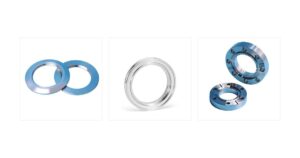
How to Identify a Vacuum Flange: KF, ISO and CF at a Glance
Three questions identify almost any vacuum flange: how big is the bore, what seals it, and how is it clamped or bolted. A practical checklist with sizes.
Three questions identify almost any vacuum flange: how big is the bore, what seals it, and how is it clamped or bolted. A practical checklist with sizes.
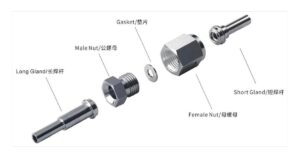
Four parts, two polished shoulders and one metal gasket. What to inspect before assembly, the make-up sequence, and why the gasket is replaced every time.
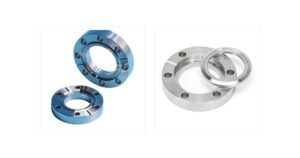
Both CF styles seal identically over a copper gasket. The difference is whether the bolt holes turn with the tube — plus what tapped and through holes change at assembly.
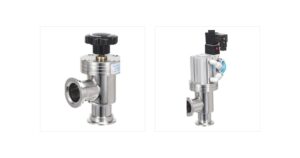
Manual valves are hand-driven and need no utilities; pneumatic valves add air, power and position feedback. Compare size coverage, air supply and mounting rules.
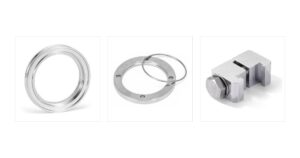
ISO-K closes with claw clamps, ISO-F with a bolted outer ring that rotates. Compare outer diameters, clamp counts, hole patterns and the space each one needs.
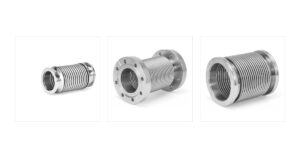
Select a vacuum bellows by connection system, flange size, free length and motion. KF, ISO-K and CF ranges, hardware list and the checks to run before you order.
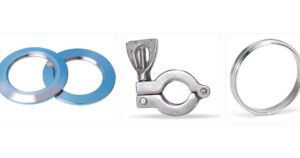
KF, NW, QF and ISO-KF usually name the same clamp-type vacuum flange. See the name map, the flange-OD size chart and the full hardware list before you order.
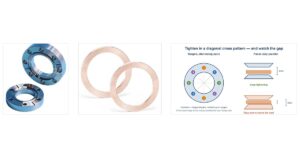
Assemble a CF flange without damaging the knife edge: clean handling, centring the copper gasket, staged cross tightening and checking the faces stay parallel.
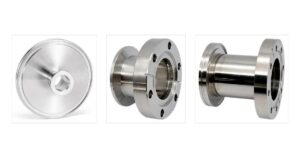
How to choose a vacuum flange adapter: the six adapter families for KF, ISO-K/ISO-F and CF, how to read the size code, and what to check before ordering.
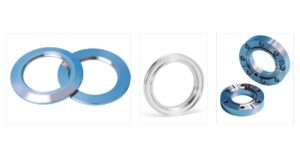
Compare KF, ISO-K/ISO-F and CF vacuum flanges: sealing method, clamping, size range and the checks to confirm before you request a quote.