
Quick answer. KF, ISO and CF are three different vacuum connection systems, and they are not interchangeable without an adapter. KF is a quick-release system that seals with an elastomer O-ring and closes with a clamp. ISO-K and ISO-F are larger systems that also use a centring ring and O-ring, but close with claw clamps (ISO-K) or bolts through a loose ring (ISO-F). CF is an all-metal system that seals by pressing a knife edge into an oxygen-free copper gasket, tightened with bolts. The right choice depends on the size you need, how often the joint is opened, and what the seal material must tolerate in your process.
Quick comparison
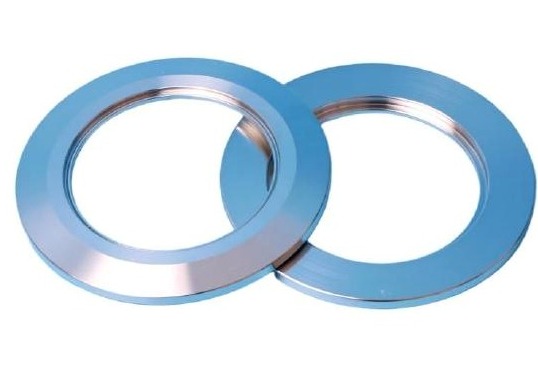
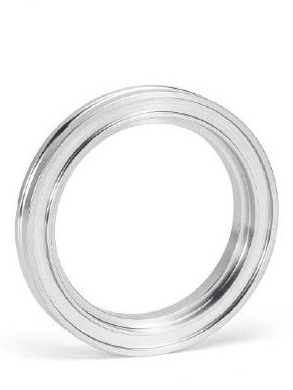
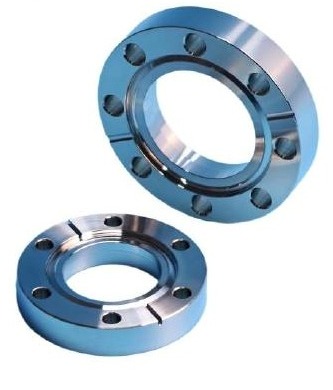
| KF (ISO-KF) | ISO-K / ISO-F | CF | |
|---|---|---|---|
| Seal type | Elastomer O-ring | Elastomer O-ring | Oxygen-free copper gasket, metal seal |
| Closure | Clamp over two mating flanges | ISO-K: single/double-claw or caliper clamp · ISO-F: bolts through a loose ring | Bolts |
| Typical character | Modular, fast assembly and disassembly | Larger bore, frequent cleaning and disassembly | All-metal, fixed high-integrity joint |
| Catalog size coverage at PC Vacuum | KF10–KF200; quick-release fittings, clamps and valves concentrated in KF10/16/25/40/50 | ISO63–ISO500, upper limit varies by product | CF16–CF250 |
| Must be specified as | KF (KF/NW naming varies by market) | ISO-K or ISO-F — never “ISO” alone | CF |
How each connection system works
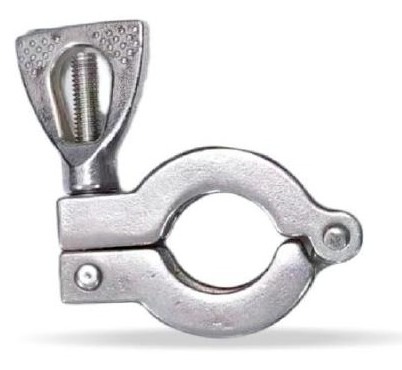
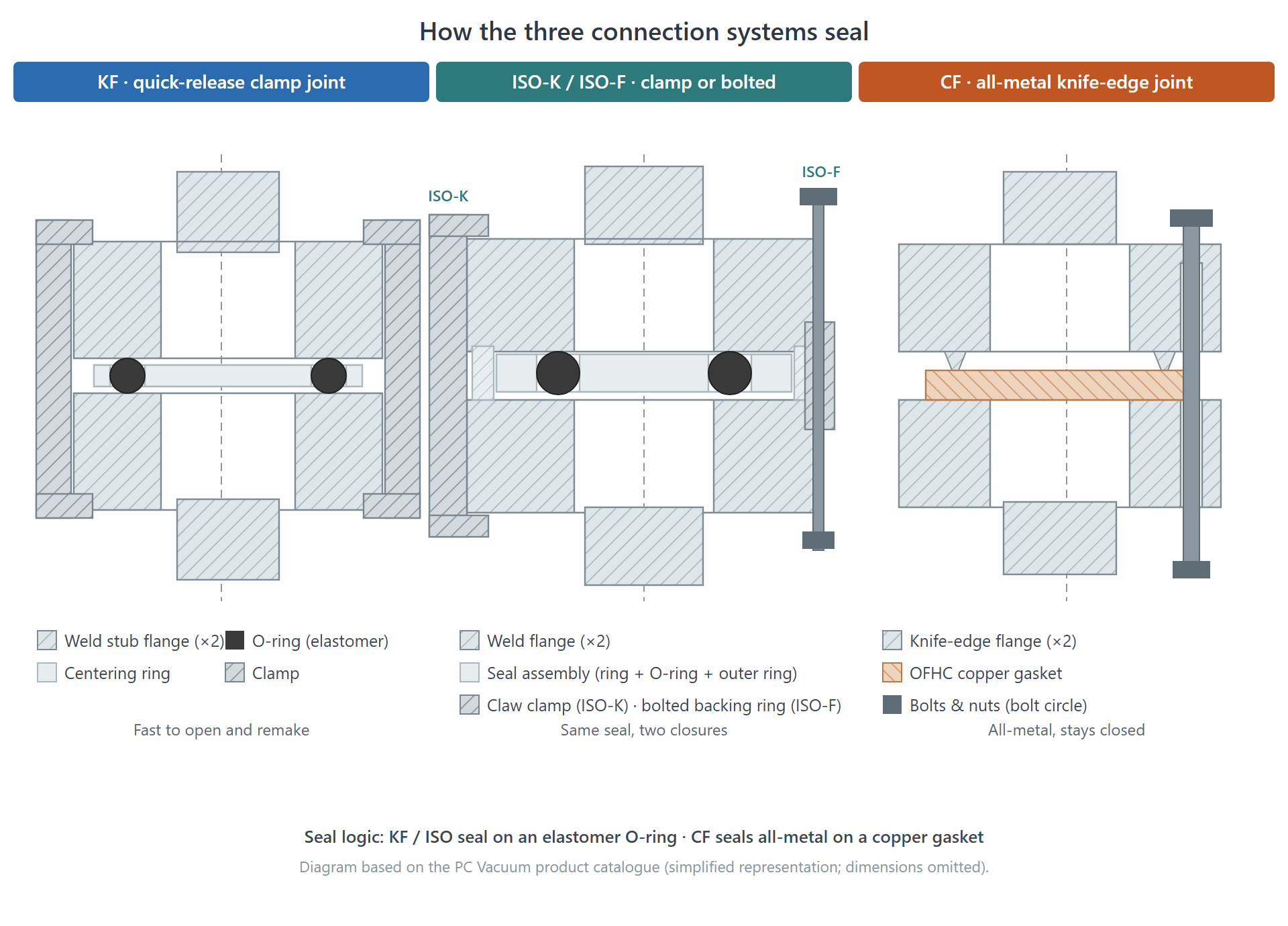
KF (ISO-KF). A KF joint is built from three elements: two matching flanges, a centring ring fitted with an elastomer O-ring, and a clamp that pulls the flanges together. The centring ring keeps the O-ring in position so it is not drawn into the line. Because the joint relies on a clamp and a compressible O-ring, it is designed to be opened and closed frequently, which is why KF is common on smaller lines, roughing and backing lines, and anywhere the connection is reworked during setup or maintenance. The O-ring material, rather than the flange body, is usually the limiting element, so KF is normally chosen where an elastomer seal is acceptable for the medium and process.
PC Vacuum lists KF flange components from KF10 to KF200, with the quick-release fittings, clamps and valves concentrated in KF10, KF16, KF25, KF40 and KF50. Materials are listed as SS304 and SS316L; clamps as aluminium or SS304; O-rings in FKM and NBR.
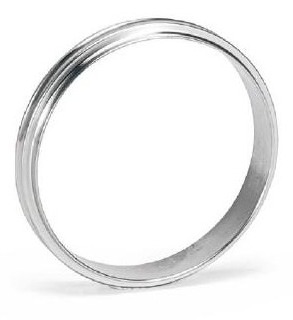
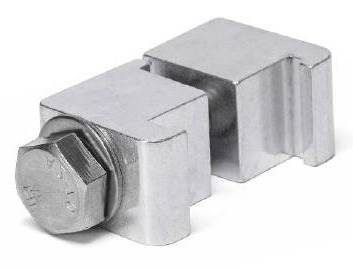
ISO-K and ISO-F. ISO-K and ISO-F share the same sealing principle as KF — a centring ring and O-ring between two flange faces — but they are used at larger bores and are closed in two different ways. ISO-K uses single-claw, double-claw or caliper clamps and is quickly assembled. ISO-F uses bolts through a loose ring, which produces a more positively bolted joint where that is required. The two are not two names for the same part: on an order, ISO-K and ISO-F must be stated explicitly, because the closure hardware and the flange face differ.
PC Vacuum lists ISO-K weld flanges, blanks, straight tubes, elbows, tees, manifolds and bellows; ISO-F rotatable (loose-ring) flanges; and ISO-BT fixed weld flanges and blanks. Catalog coverage is mainly ISO63 to ISO500, with the exact upper limit varying by product.
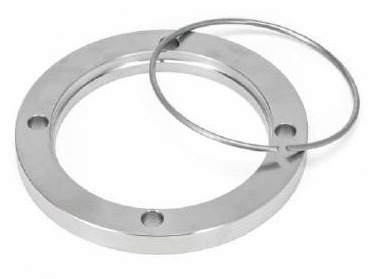
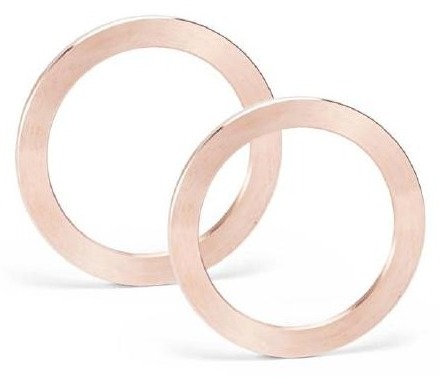
CF. CF (ConFlat) uses a knife edge machined into each flange face. When the bolts are tightened, the knife edges press into an oxygen-free copper gasket placed between them, forming a metal seal. There is no elastomer in the joint, so the seal does not depend on an organic material at the sealing face. This is the reason CF is selected where an all-metal joint is required and where the assembled joint is expected to stay closed for long periods. The trade-off is that a CF joint is not intended for frequent opening: the gasket is deformed on assembly, and the knife edges must be protected.
PC Vacuum lists CF fixed weld flanges, rotatable weld flanges, blank flanges, oxygen-free copper gaskets, straight tubes, elbows, tees, crosses and bellows, covering CF16 to CF250.
Side-by-side comparison
Read the table above as a decision aid, not as a rating. None of the three systems is “better”; each is matched to a working condition:
- Choose KF when the line is modest in bore, the joint is opened often, and an elastomer O-ring is acceptable for the medium and temperature.
- Choose ISO-K when you need a larger bore, frequent access and fast clamp closure; choose ISO-F when the larger joint must be positively bolted rather than clamped.
- Choose CF when an all-metal seal is required and the joint is expected to remain closed; accept that the gasket is a consumable and the knife edge must be handled carefully.
How to choose: four questions
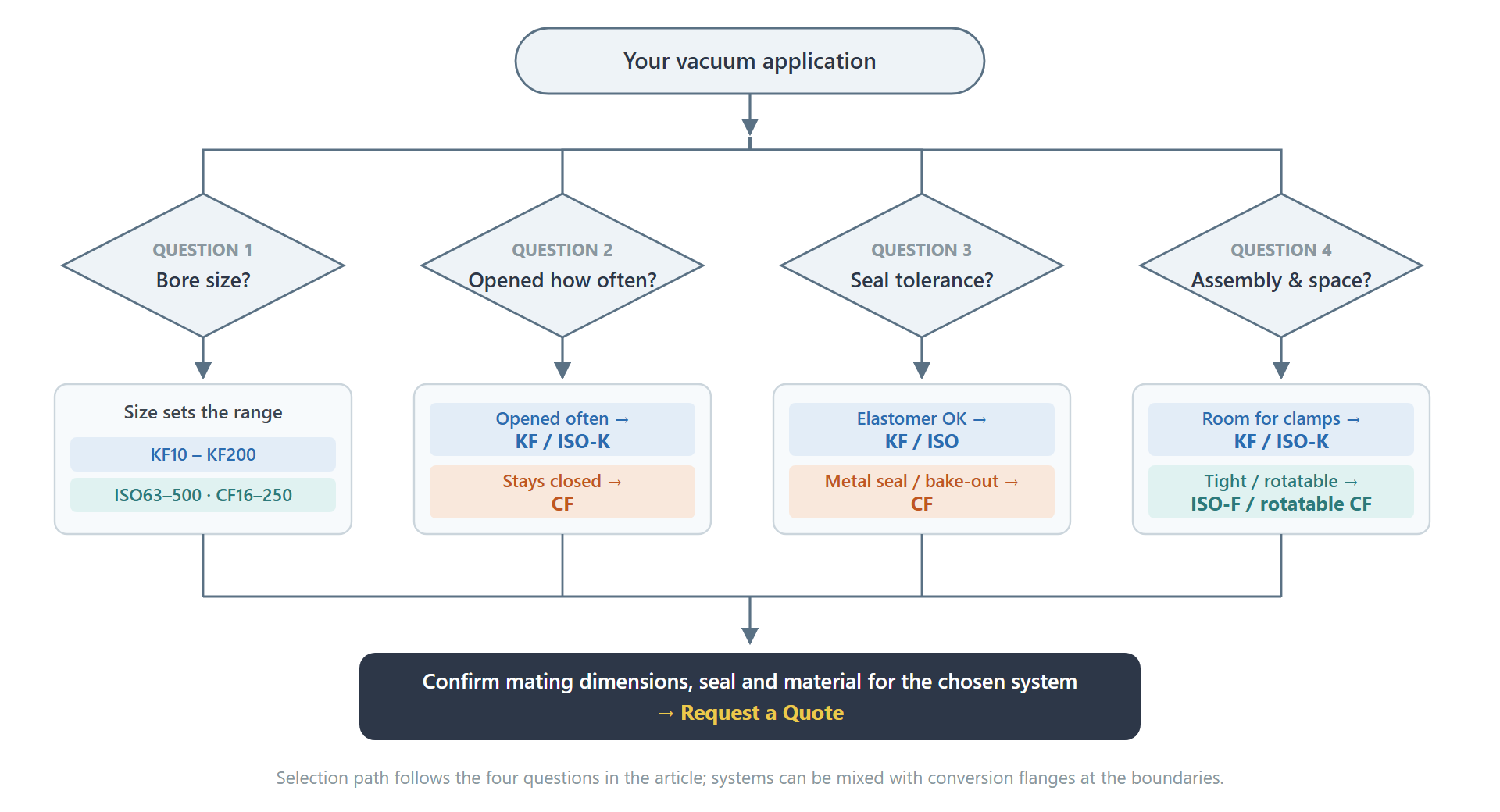
1. What bore size do you need?
Size, not preference, often decides the system first. KF components are available across KF10–KF200 but the everyday quick-release range is smaller; ISO covers ISO63–ISO500; CF covers CF16–CF250. If your required bore falls outside the economical range of one system, an adapter or a change of system at that point in the line is the usual answer.
A nominal size such as KF25 or DN25 does not, on its own, identify the part: the flange outside diameter, the tube outside diameter, and the hole or thread pattern must be confirmed as well.
2. How often will the joint be opened?
Frequent assembly points suit KF or ISO-K, where a clamp and O-ring can be released and remade quickly. Joints that must stay closed — or that carry an all-metal requirement — suit CF. Mixing the two logics within one line is normal, with adapters at the boundaries.
3. What must the seal tolerate?
The O-ring in a KF or ISO joint is an elastomer, so its suitability depends on the medium, the temperature and the vacuum level of the application, and on the specific compound — not on the flange. Where the process or bakeout rules out an elastomer at the sealing face, the metal-sealed CF joint is the appropriate family. Because elastomer temperature ratings differ between the general material data and the specific ring supplied, the working temperature of a given O-ring must be confirmed against the medium and the actual part rather than taken from a general table.
4. What is the assembly and space requirement?
A clamp needs room to be fitted and removed; a bolted joint needs room for tools and for the bolt circle; a rotatable (loose-ring) flange helps where a welded assembly must still be rotated to line up bolt holes. On larger joints in tight enclosures, this access — not the seal itself — is often what decides between ISO-K and ISO-F, or between a fixed and a rotatable CF flange.
What to confirm before you order
To select correctly, confirm these items rather than only the nominal size:
- Connection system: KF, ISO-K, ISO-F, CF — stated explicitly.
- Nominal size and mating dimensions: flange outside diameter, tube outside diameter, hole pattern or thread system.
- Seal: O-ring material and size, or oxygen-free copper gasket size.
- Flange style: weld / fixed / rotatable / blank; for CF, tapped or through holes.
- Material: SS304 or SS316L, and any clamp or ring material.
- Working conditions: medium, vacuum or pressure level, temperature, bakeout, cleaning requirement.
- Quantity, and whether a complete connection set or individual parts are needed.
- Documents: drawing, material certificate, inspection report, packaging requirement.
A complete KF connection, for example, is not just a flange: it is two mating flanges, a centring ring with O-ring, and a clamp. Ordering by flange alone is one of the commonest causes of an incomplete or mismatched order.
Common selection mistakes
Most flange problems are specification problems rather than product problems. The recurring ones are avoidable:
- Ordering by nominal size alone. “KF25” or “DN25” does not define the part. The flange outside diameter, tube outside diameter and hole or thread pattern must also match. Two parts with the same nominal label but different mating dimensions will not join.
- Writing “ISO” without K or F. ISO-K closes with a clamp; ISO-F closes with bolts through a loose ring. Naming only “ISO” leaves the closure and the flange face undefined, and the parts may not be usable together.
- Ordering the flange and forgetting the seal. A KF joint also needs a centring ring with O-ring and a clamp; a CF joint needs an oxygen-free copper gasket. A flange alone is not a complete connection.
- Sending a photo with no scale. To identify a replacement, include a rule or caliper in the frame so the measuring points can be read; a photograph alone does not carry dimensions.
- Assuming an adapter upgrades the line. An adapter makes two systems fit; it does not raise the vacuum, pressure or temperature capability of either end, and a change of bore or length affects conductance.
- Reusing a deformed metal gasket. A CF copper gasket is formed by the knife edges on assembly; treat it as a consumable and inspect the knife edges before remaking the joint.
- Mixing material assumptions. Confirm the actual material of each item — flange, clamp, ring, gasket — rather than assuming the whole assembly is one grade.
Going through these seven points before an order usually prevents the round of clarification that otherwise follows.
Can KF, ISO and CF be mixed in one line?
Yes, at the boundaries. Conversion flanges are available between KF, ISO and CF — for example KF–KF reducers, KF–ISO-K, KF–CF, CF–ISO and ISO–ISO — so a line can be assembled from the system that suits each section.
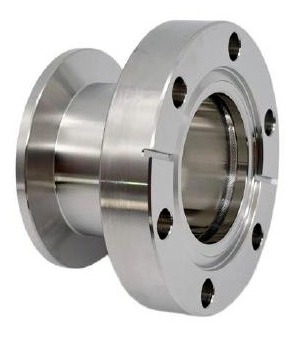
One point is worth stating plainly: an adapter resolves the mechanical connection only. It does not raise the vacuum, pressure or temperature rating of either end of the line, and a change in bore or length changes the conductance of that section. Where line performance is critical, confirm the effect of the adapter with the technical contact before ordering rather than assuming the adapter is neutral.
Installation and handling basics
The three systems are installed differently, and most joint problems trace back to the seal face and the tightening sequence:
- KF / ISO: keep the O-ring clean and correctly seated in the centring ring, and bring the clamp up evenly.
- CF: check that the flange face, the knife edge and the copper gasket are clean and free of scratches; centre the gasket; tighten the bolts diagonally in stages so the flange faces stay parallel.
- All systems: protect sealing faces until assembly, and do not reuse a deformed metal gasket as if it were new.
Specific tightening torques depend on the size and the manufacturer’s instruction, so they are not given as a single general number.
FAQ
Are KF, ISO and CF flanges interchangeable?
No. They use different sealing and closure methods and have different mating dimensions. A joint between two different systems requires a conversion flange; the adapter resolves the mechanical connection but does not change the rating of either system.
Which system is best for high vacuum?
That depends on the required vacuum level, the medium and the bakeout conditions, and it is confirmed per application. As a general principle, an all-metal CF joint is chosen where an elastomer seal at the flange face is not acceptable, while KF and ISO joints rely on an elastomer O-ring.
Can I use ISO-K and ISO-F parts together?
They share the centring ring and O-ring principle but close differently — ISO-K by clamp, ISO-F by bolts through a loose ring — so the closure hardware and flange faces are not interchangeable. State ISO-K or ISO-F explicitly.
For the full comparison — outer diameters at the same size, clamp counts and hole patterns — see ISO-K vs ISO-F Vacuum Flanges.
How do I identify an existing flange before ordering a replacement?
Confirm the system, the flange outside diameter, the tube outside diameter, the hole or thread pattern and the seal arrangement. Where there is no drawing, a photograph with a rule or caliper across the measuring points is usually enough to identify the system and size.
Do KF and NW mean the same thing?
Naming varies by market: NW (and QF) are related designations used for the same quick-release family, but the size you receive is defined by the mating dimensions, not by the label alone. Always confirm the actual dimensions on the order. The name-to-size mapping is covered in detail in KF, NW and QF: Are They the Same Vacuum Flange?.
What information do you need to quote a flange?
At minimum: connection system, nominal size and mating dimensions, seal type, flange style, material, working conditions and quantity — plus a drawing if the part is non-standard or is a replacement for an unknown original. See Request a Quote.
Next step: send your specification
If you already know your system, open the matching category page:
- Vacuum Flanges — comparison and navigation across the three systems
- KF Vacuum Fittings — KF10 to KF200
- ISO Vacuum Fittings — ISO-K and ISO-F, ISO63 to ISO500
- CF Vacuum Fittings — CF16 to CF250
- Vacuum Flange Adapters — KF–KF, KF–ISO, KF–CF, CF–ISO, CF–CF, ISO–ISO
If you are still deciding, send your drawing or BOM and the working conditions. Items that can be fixed are quoted directly; anything undecided is listed as open rather than assumed.